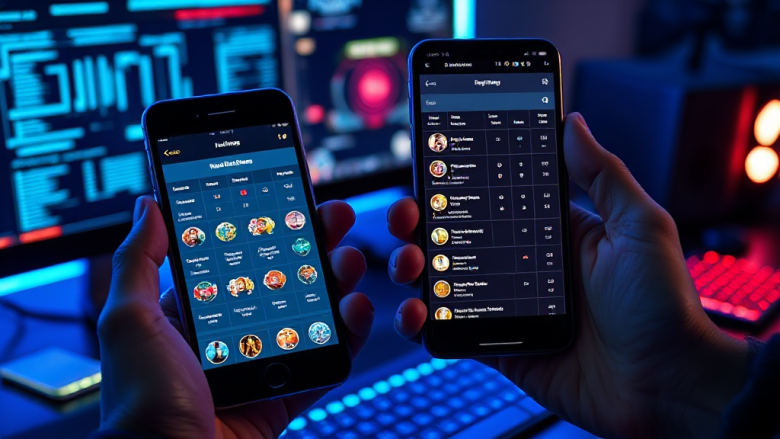
How Long Does a Rummy App Download List Check Take? My 20-Minute Routine
Most guides hand you a list of app names and stop there. They never tell you the one thing that actually decides whether your install goes smoothly: the file size and lobby structure you are committing to before you tap install. I check those two details first, every single time, and it takes me about twenty minutes from opening my browser to having a working app on my home screen. That is the routine I am going to walk you through, in the order I actually do it.
My starting point is always a directory rather than a search engine. I open Rummy App Download List and treat it as my index page, because it groups apps by name, size and lobby type in one view. That single habit saves me from downloading three apps that all turn out to be the same 90 MB build with different icons. From there, the rest of the process is mostly filtering and verifying.
Step 1: Build Your Shortlist Before You Download Anything
The mistake I made for years was downloading first and reading later. Now I do the opposite. I spend the first eight to ten minutes purely on shortlisting, and I never leave the directory during that phase.
Here is the exact order I work in:
Filter by file size first. This is the most underrated column on any listing page. If my phone has limited storage or I am on a metered connection, I set a mental ceiling before I look at anything else. A compact build around 20 to 40 MB is usually a lightweight shell with a small lobby, while 80 to 120 MB builds tend to carry more tables, more variants and heavier graphics. Neither is better in the abstract — the point is that you should know which one you are choosing before the download bar starts moving.
Then look at lobby type. Lobby structure tells you how the app is organised once you are inside it. Some apps open straight into a single game view. Others present a dashboard with categories, room tiers and a profile area. I prefer a clear dashboard because it means fewer taps to find what I want, but a friend of mine deliberately picks the single-view apps because they load faster on an older handset. Match the lobby to your device and your patience level.
Then read two or three reviews, not twenty. I read the most recent ones and the lowest-rated ones. Recent reviews tell me whether the current build works; low-rated reviews tell me what breaks. If the same complaint appears three times in a row — crashes on launch, a lobby that will not load, a login loop — I drop that app from the shortlist immediately. No amount of attractive presentation outweighs a repeated structural complaint.
Then check the update date. An app that has not been touched in a long time is not automatically bad, but it does mean the developer is not actively maintaining it. I lean toward builds that show recent activity, because Android version changes break old apps quietly.
By the end of this phase I usually have two, sometimes three, candidates. Never more. A shortlist of eight is not a shortlist, it is a second list.
Step 2: Verify the Source and Install Cleanly
This is where most people lose time, and it is entirely avoidable. The download itself should take two to four minutes. The problems come from skipping verification.
Confirm the listing matches the file. Before I tap anything, I check that the app name in the directory matches the app name on the download page, and that the stated size roughly matches what my browser reports. A mismatch of a few megabytes is normal. A mismatch of forty megabytes usually means I am looking at a different build than the one that was reviewed.
Install one app at a time. I know it is tempting to queue three downloads and sort it out later. Do not. When two installs run together on a mid-range phone, the second one frequently fails silently, and you end up troubleshooting a problem that does not exist. One app, wait for it to finish, open it, confirm it launches, then move on.
Grant permissions deliberately. When the app asks for storage or notification access, I read the request rather than tapping through it. Notification permission is usually worth granting because it tells you when the app has been updated. Anything that looks unrelated to running the app itself, I decline and see whether the app still works. Most of the time it does.
Do a two-minute smoke test. This is the step I added after one too many wasted evenings. I open the app, let the lobby load fully, navigate to one screen and back, then close it and reopen it. If it survives that cycle without stalling, it is stable enough to keep. If it hangs on the second launch, I uninstall and go back to my second candidate. Better to lose two minutes now than two hours later.
One practical note on storage: clear at least double the app’s stated size before you install. A 60 MB download needs room to unpack, and a phone sitting at 98 percent capacity is the single most common reason an install fails halfway.
Step 3: Keep the List Useful After the First Install
The routine does not end when the app opens. What separates a one-time download from a genuinely useful list is what you do in the week after.
Re-check the listing after major updates. When an app pushes a new version, the size and sometimes the lobby layout change. I go back to the directory and confirm the entry still reflects reality. If a listing says 45 MB and the new build is 110 MB, that is worth knowing before I update on mobile data.
Keep a personal shortlist of two, not one. Apps get abandoned, servers get restructured, and a build that worked in January can behave differently by mid-year. Having a verified second option already researched means a broken app costs you a five-minute switch instead of a fresh twenty-minute search.
Track what actually mattered to you. After a month I can usually name the two or three factors that determined whether I kept an app: how fast the lobby loaded, how clear the navigation was, how often it needed an update. Those are the filters I apply first next time. My shortlist gets faster every cycle because I stop re-evaluating criteria I have already settled.
Ignore anything that promises a result instead of describing an app. A good listing tells you what the app is, how big it is and how it is organised. It does not need to promise you anything. When I see a listing that leads with hype rather than specifications, I close the tab. The directory format exists precisely so you can compare on facts.
The whole loop — shortlist, verify, install, revisit — is why I stopped treating a download list as a one-time shopping trip. It is a reference I return to whenever my phone, my storage situation or my preferences change. Twenty minutes now, and the next decision takes five.
Frequently Asked Questions
How long should the whole process actually take?
For me it is roughly twenty minutes: eight to ten minutes shortlisting, three to four minutes downloading, and the rest on verification and a launch test. If you skip the shortlist and download on impulse, you will often spend longer than that cleaning up apps that did not fit your device.
Does a bigger file size mean a better app?
No. Size tells you about complexity, not quality. A larger build usually means more tables, more variants and heavier graphics, which is only an advantage if your phone handles it comfortably. A smaller build can be the better choice on an older handset or a limited data plan.
Why do I need to check the listing again after an update?
Because updates change the numbers. File size grows, lobby layouts get reorganised, and minimum Android requirements shift. Re-checking the listing takes a minute and prevents you from starting an update on mobile data that is three times larger than you expected.
What should I do if an app fails to install?
Free up storage first — aim for at least double the stated file size in free space. Then restart the phone and try a single install on its own rather than alongside another download. If it still fails, move to your verified second choice instead of repeatedly retrying the same build.